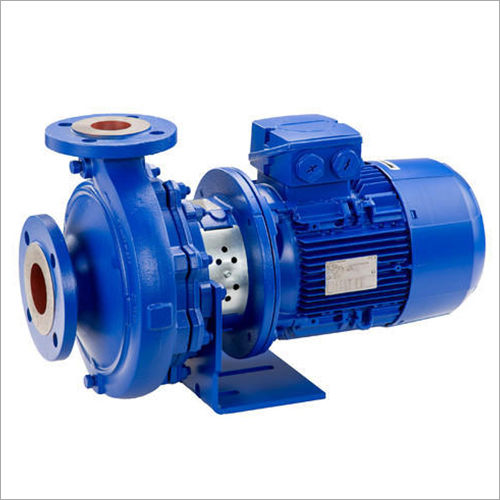
About 2850 Rpm Turbine Blower
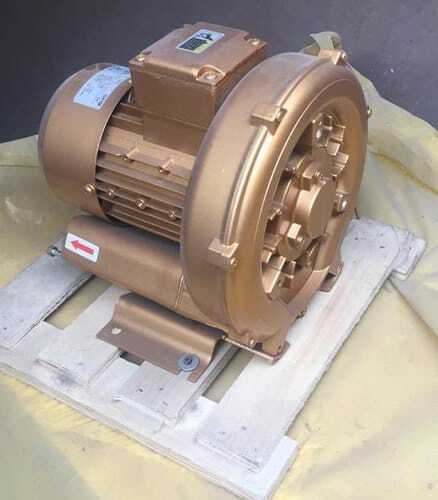
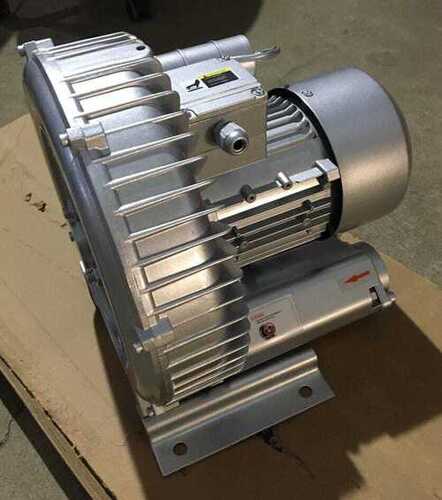
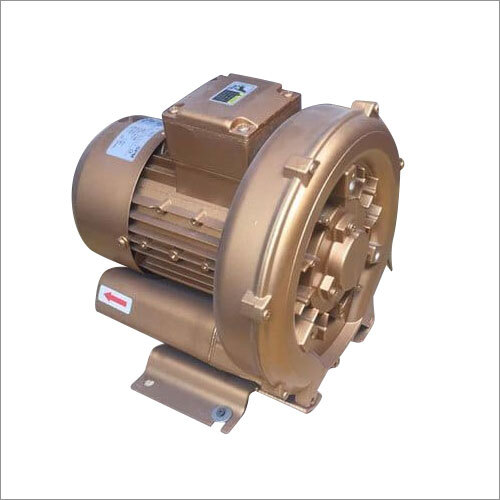
A turbine blower is a non-positive displacement blower that can be used as a compressor or as a vacuum pump given the high volume and pressure. Additionally, it is called a side channel blower or regenerative blower. The turbine blower operates according to the same basic principle under all names. This industrial blower is composed of an impeller that is mounted on the motor shaft and is quickly rotated. In this blower, the only moving part is the impeller.
Product details
|
Power
|
1 HP to 10 HP
|
|
Generator/Alternator Type
|
Power
|
|
Frequency
|
NA
|
|
Material
|
Aluminium
|
|
Pressure
|
150 to 500 M bar
|
|
Voltage
|
NA
|
|
Brand
|
SPM
|
|
Surface Finish
|
Aluminium
|
|
Grade
|
NA
|
Advanced Cooling and Reliable ProtectionOutfitted with an external fan-cooled system and classified at IP54, this turbine blower ensures safe operation in challenging industrial settings. Its insulation class F and robust aluminum alloy body guarantee resilience against heat and dust, promoting a stable, long-lasting performance. This protection allows for continuous duty, making it suitable for round-the-clock operations.
High-Efficiency Performance Across ApplicationsDesigned with a single-stage centrifugal theory and a mechanical seal, the blower maintains efficient airflow at a capacity of 150 m/h and up to 200 mbar discharge pressure. Its self-priming and oil-free nature ensures minimal maintenance and reliable function in applications such as aquaculture, wastewater processing, and pneumatic conveying.
User-Friendly Design and InstallationWith base-mounted construction and manual control, the blower offers straightforward installation and operation. The low noise levelbelow 70 dBmakes it compatible with environments requiring quiet operations. CE certification underlines its commitment to safety and industry standards, ideal for professional export and manufacturing requirements.
FAQs of Turbine Blower:
Q: How should the turbine blower be installed and mounted for optimal performance?
A: For best performance, the turbine blower should be securely base-mounted on a stable surface to minimize vibrations and noise. Ensure the ambient temperature remains between -10C and +50C, and the device is connected to a 380V power supply. Correct alignment of the inlet and outlet ports (both 1.5 inch, DN40) is essential for efficient operation.
Q: What are the main benefits of using an external fan-cooled, induction motor blower like this model?
A: The external fan cooling system ensures effective heat dissipation, enabling continuous, maintenance-free operation even under prolonged use. The induction motor is highly reliable, energy-efficient, and well-suited for demanding industrial scenarios, resulting in reduced downtime and long-term cost savings.
Q: When should I use this turbine blower in my process applications?
A: This blower is ideal for continuous-duty industrial applications where oil-free air is required, such as aquaculture aeration, waste water treatment, and pneumatic conveying. Use it when you need consistent airflow up to 150 m/h and pressures not exceeding 200 mbar.
Q: What types of maintenance does this turbine blower require?
A: This blower is designed to be maintenance-free, thanks to its oil-free and sealed structure. Routine inspections to ensure inlet/outlet ports are clear and the cooling fan is unobstructed may enhance service life, but regular lubrication and internal cleaning are not necessary.
Q: Where can this blower be effectively utilized?
A: The blowers robust design makes it suitable for diverse environments, including indoor and outdoor industrial setups. Its corrosion-resistant aluminum alloy construction and IP54 protection allow placement in areas exposed to dust and occasional water splashes, such as fish farms, waste treatment plants, and factories.
Q: What safety features are incorporated in this blower?
A: Safety is ensured through the blowers IP54 protection class, mechanical seal to prevent leaks, and compliance with CE standards. Its die-cast aluminum impeller and sturdy build further ensure operational safety and longevity, reducing risks of mechanical failure.
Q: How does this blower contribute to operational efficiency and environmental safety?
A: The blower delivers high performance with low noise emissions (below 70 dB) and does not require oil, eliminating the risk of air contamination. Its continuous-duty design and long service life reduce resource consumption, supporting efficient, reliable, and environmentally conscious operation.






 Send Inquiry


 Send Inquiry